Is this guide for you?
If your washer has an Extra Power button in the center of the cycle-selector knob and it makes you hold Start until it counts down 3-2-1 — yes, this guide is for you.
Covers Maytag models MVW7230, MVW7232, MVW6230, MTW6200, MVW5435, and MVW5430.
Part 1 is how to run a load. Part 2 explains the quirks — click any topic to open it.
Jump to
Part 1 — How to start a load
- Load your clothes
- Load the detergent
- Load the fabric softener
- Skip the Water Faucet button
- Pick your cycle
- Set Spin, Temp, and Soil
- Turn off Extra Power
- Hold Start until 3-2-1
Part 2 — How the washer actually works
Part 1 — How to start a load
1. Load your clothes
Aim for a medium-to-full load. Small loads tend to go off balance (see Part 2). If you only have a few items, throw in a couple of towels. Do not pack the tub tight — clothes need room to tumble.
2. Load the detergent
Pour HE detergent into the detergent compartment of the dispenser drawer. Regular non-HE detergent over-suds this machine and causes problems.
Use less than the bottle recommends — the cap lines are set for old-style washers. Rule of thumb: 1-2 tablespoons for a normal load, not a full cap.
3. Load the fabric softener
Mix your softener at least 50/50 with water before you pour it in. Modern concentrated softeners are too thick to flow through the dispenser on their own — pour them in straight and you’ll find a puddle sitting in the tray after the cycle.
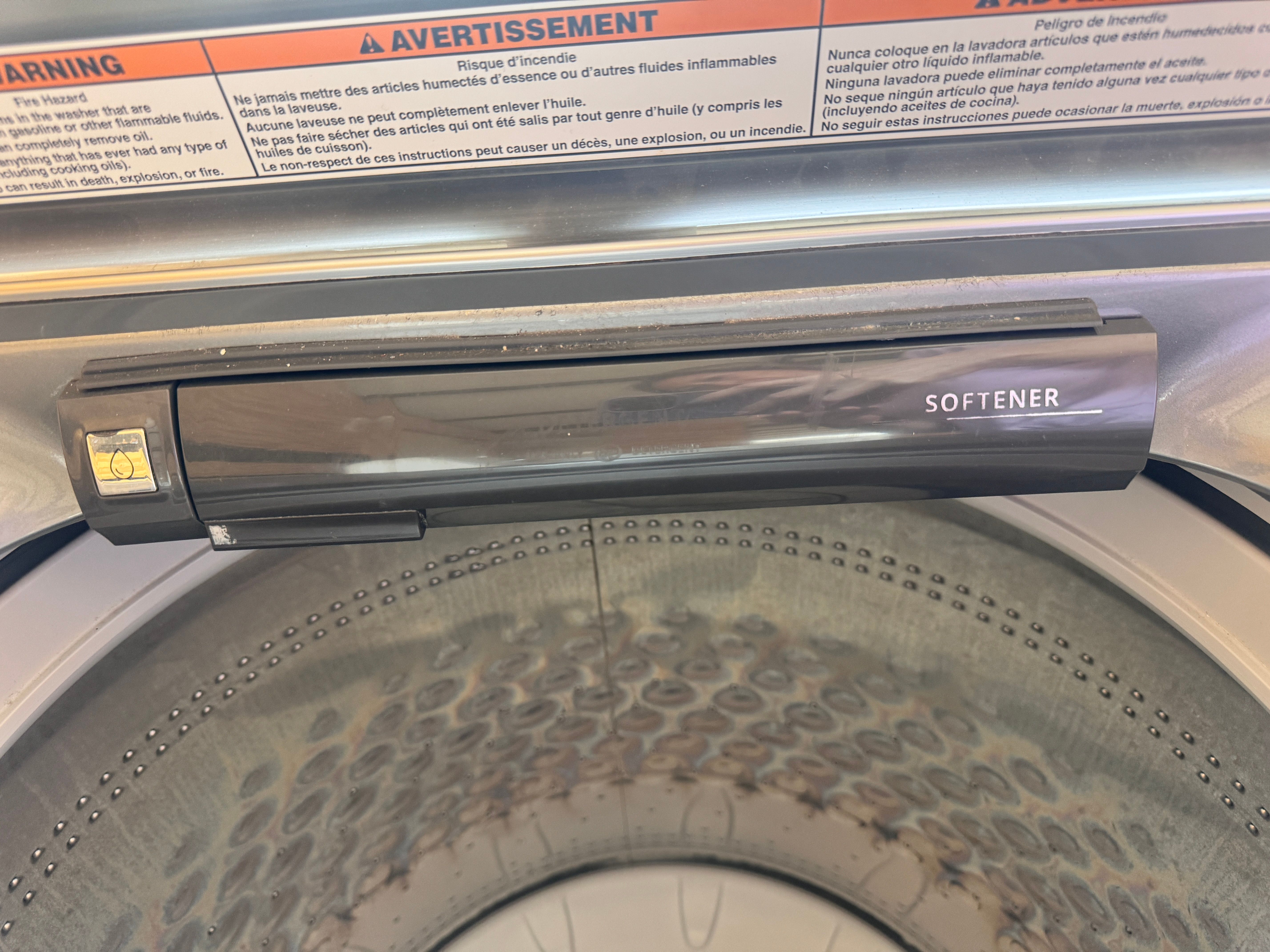
4. Skip the Water Faucet button (unless you want a soak)
The button next to the softener dispenser (marked with a water-drop icon) starts a soak that can last up to 3 hours if the lid is closed. Press it by accident and your washer will not start a normal cycle.
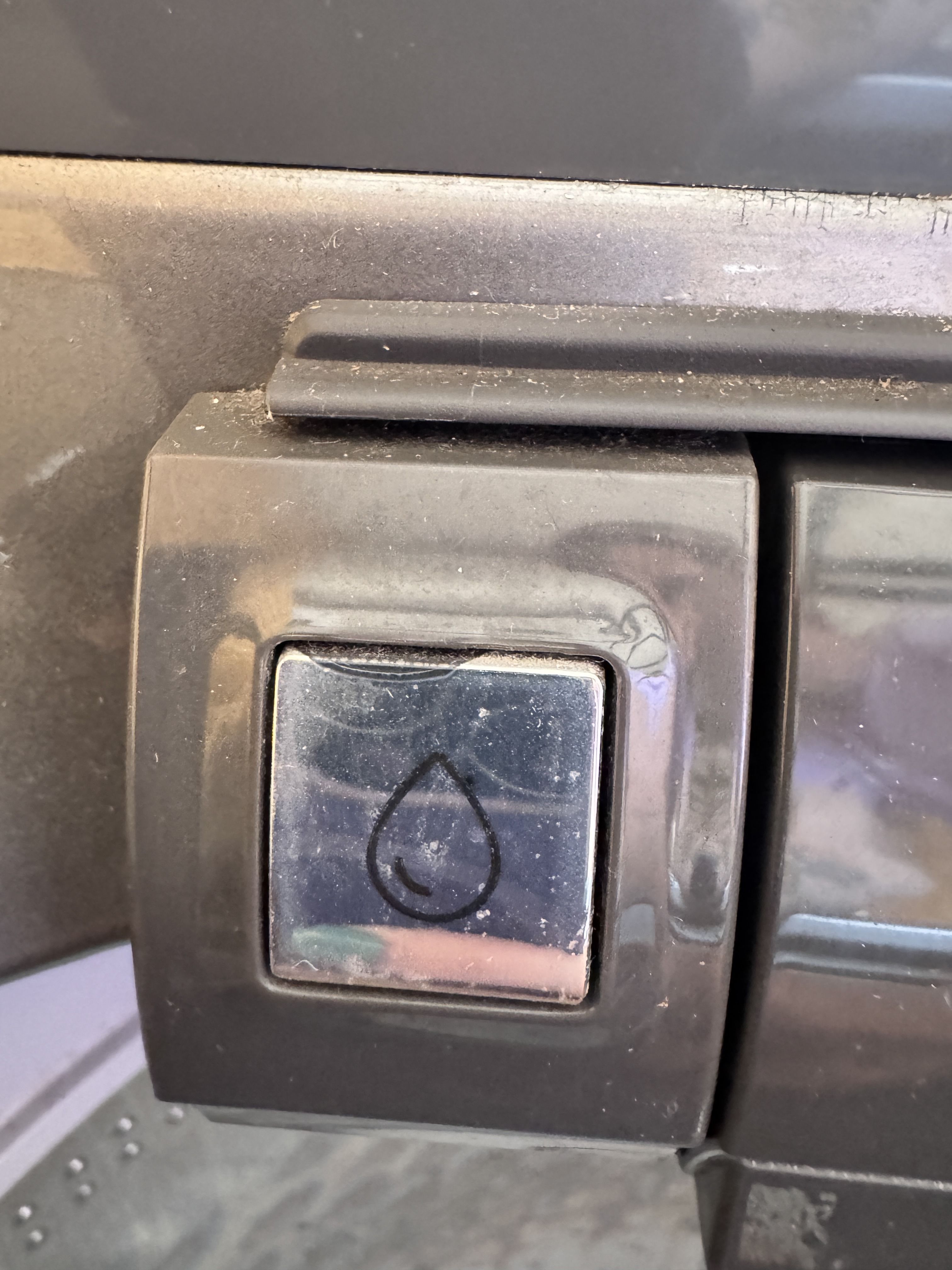
If you pressed it by accident, cancel by pressing the Power button — Pause only pauses the soak, it doesn’t cancel it.
5. Pick your cycle
For everyday loads: Normal / Regular. For lightly-soiled or in-a-hurry: Quick Wash. For very dirty work clothes: Heavy Duty.
6. Set Spin, Temp, and Soil
Three buttons on the control panel change how your load turns out:
- Spin — how hard the washer spins water out at the end.
- Temp — water temperature (Hot, Warm, Cold).
- Soil — how dirty the load is (Light, Normal, Heavy).
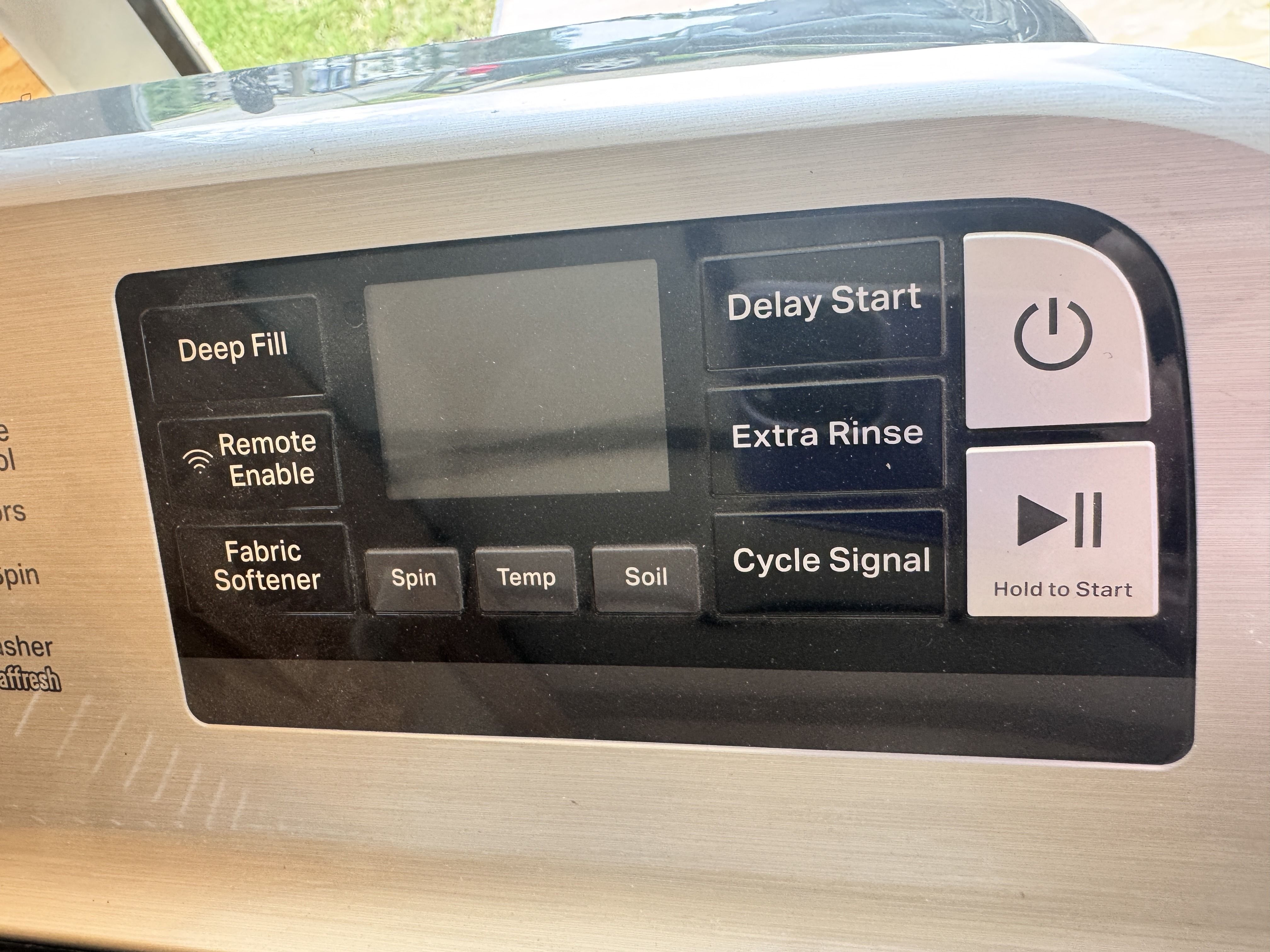
The one that catches people out is Spin. Set to Low or No Spin, clothes come out heavy and soaked and you’ll think the washer never spun. Every load, check the Spin setting — bump it to Medium or High unless you have a specific reason for a gentle spin.
7. Turn off Extra Power
The Extra Power button is in the center of the cycle-selector knob. It sounds strong; it actually tells the washer to use less water and more detergent. Clothes come out feeling barely washed.
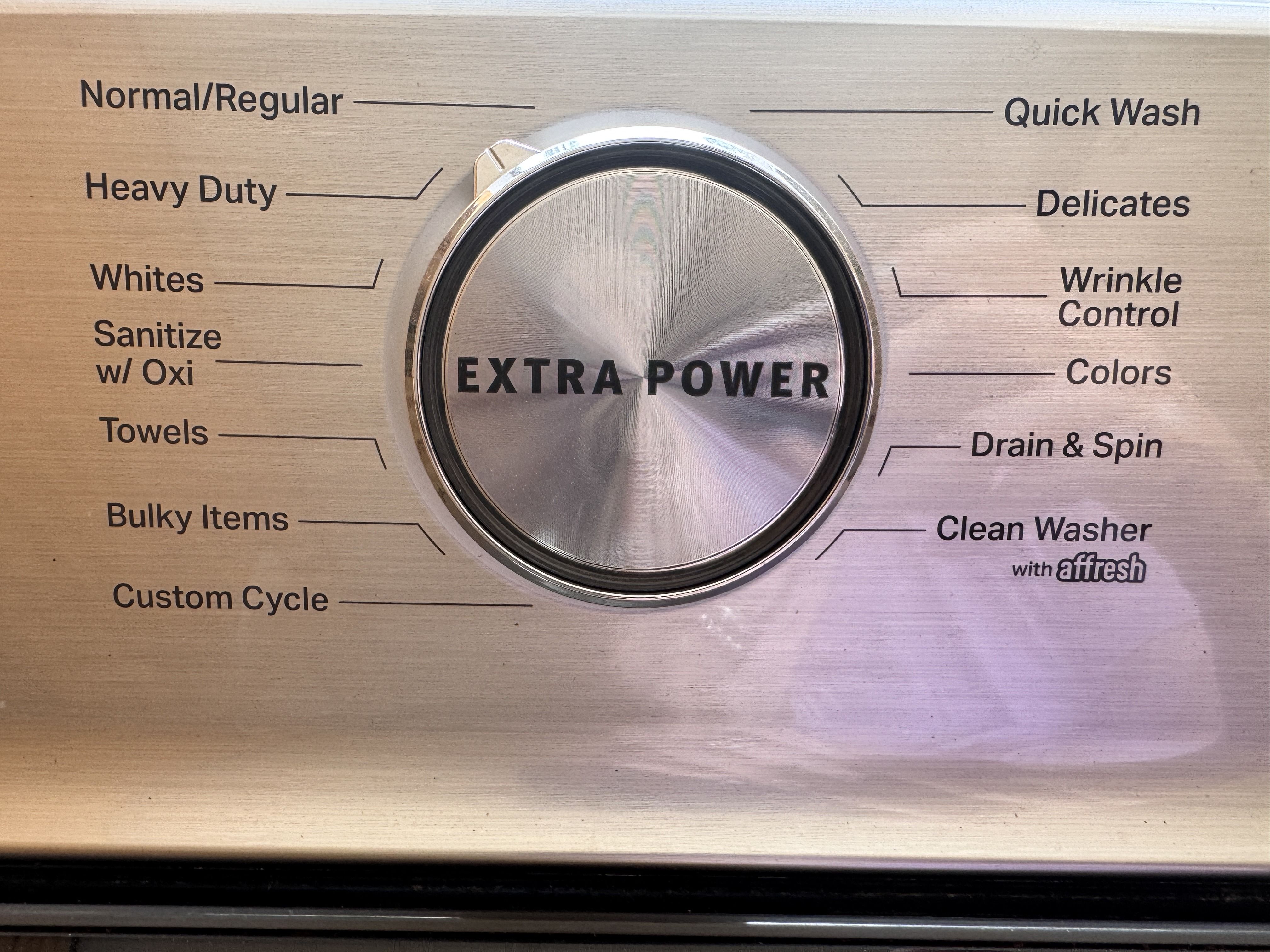
When Extra Power is on, a ring of light around the button glows. Tap it off. Some cycles turn it on automatically — always check the ring before you press Start.
8. Hold Start until 3-2-1
You can’t just tap Start. Press and hold until the display counts down 3… 2… 1… then the cycle begins.
- Let go too early → the washer never starts.
- Hold past 1 → the washer gets confused.
Watch the display and release the instant it hits 1.
Part 2 — How the washer actually works
These are the behaviors that make new owners think their washer is broken. Click any topic to open it.
The buttons are touch, not push
The buttons on the control panel — Spin, Temp, Soil, Start/Pause, Power, all of them — are touch buttons. They’re not the mechanical push-buttons on old washers. Pressing harder does nothing. A light tap with your fingertip is all they need.
If you tap a button and nothing seems to happen, don’t press harder. Just tap it again with a normal light touch.
Half-empty tub is by design
This machine uses a lot less water than old-style top-loaders. Look inside and the tub may only be half full. That’s not broken.
Old washers filled the tub and let clothes float. This one uses less water on purpose so clothes rub against each other and against the impeller (the low disc at the bottom) as they tumble. That friction is what cleans them. Add more water and the clothes float, rub less, and get cleaned less.
Cycle times are long and unpredictable
The Normal cycle usually runs an hour to an hour and a half. Some settings push it well past that — Sanitize w/ Oxi, Bulky Items, Extra Rinse, and a heavier Soil level can each add another 30 minutes or more.
The display shows a countdown as the cycle runs, but it’s not reliable. The washer keeps re-sensing the load and will jump the remaining time up or down by several minutes without warning. Don’t plan your morning around what the display says. Trust the completion beep, not the clock.
Need laundry done fast? Use Quick Wash — about 30 minutes for lightly-soiled clothes.
It sits still for a minute or two after Start
Once the countdown finishes, the washer will sit quietly with no water coming in for the first minute or two. It is weighing your load. Give it that minute or two before you assume something is wrong.
Small loads go off-balance
Small loads bunch on one side of the tub and throw the spin cycle off balance. When that happens, the washer stops spinning, refills, agitates to redistribute, and tries again. If it still can’t balance, it gives up and drains without spinning — you open the lid to sopping-wet clothes.
Wash bigger loads when you can. For a small load, spread clothes evenly and add a couple of towels for balance.
“Cold” isn’t cold and “Hot” isn’t hot
The washer automatically adjusts water temperature no matter what you pick. Cold gets a splash of warm mixed in so detergent will dissolve. Hot gets cold mixed in to protect fabrics and meet energy standards. This is called auto-temperature control — not a broken water heater.
The lid stays locked a while after Pause
The lid locks before the spin phase and won’t release until the drum has fully stopped moving. If you hit Pause during a spin, expect to wait several minutes for the drum to slow before the lock clicks open. Don’t force it.
The 10-year warranty covers only 2 parts
The big 10 YEAR LIMITED PARTS WARRANTY sticker on the front — read the fine print.
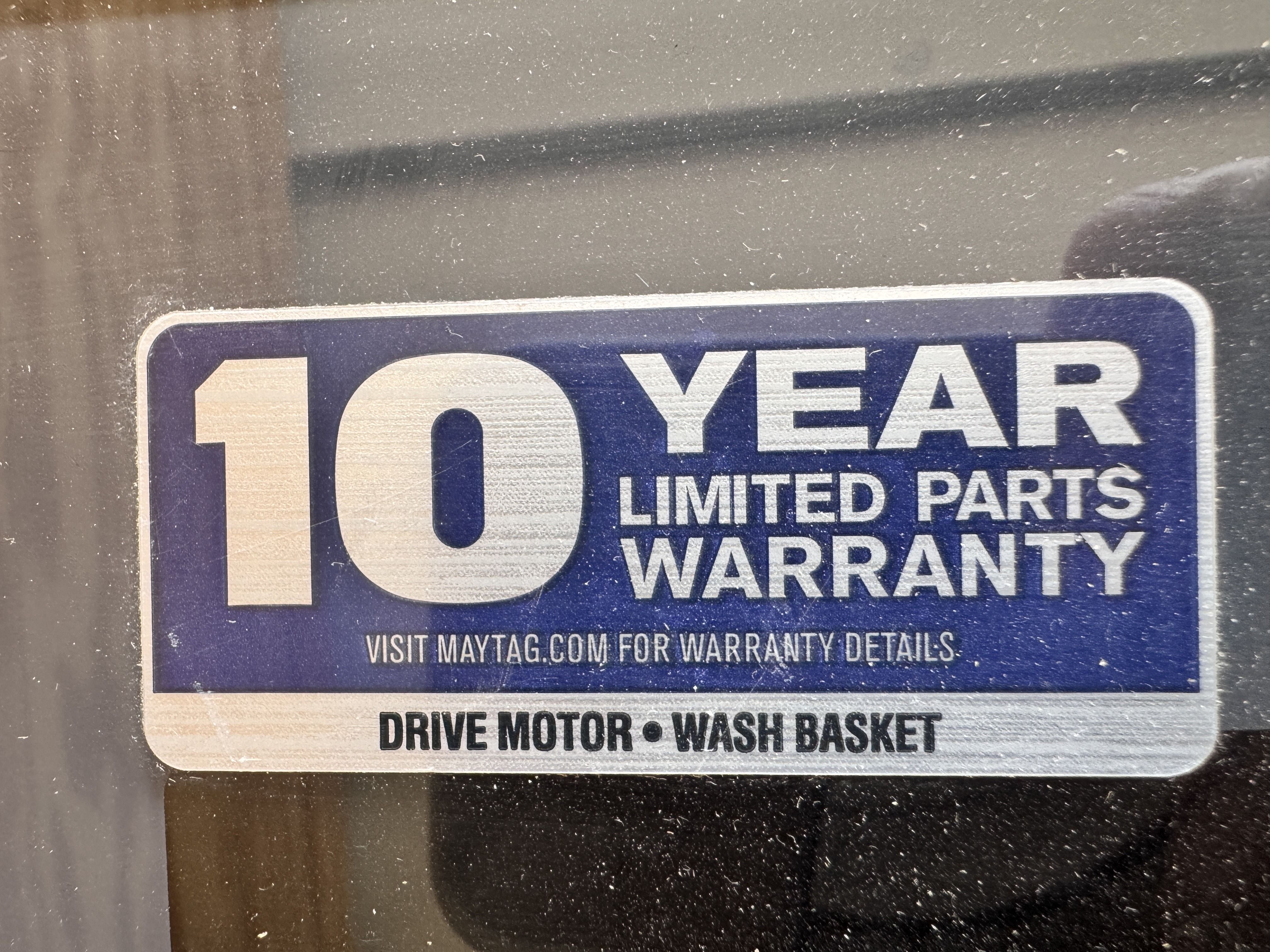
It covers exactly two things: the drive motor and the wash basket. Everything else — control board, pump, valves, dispensers, lid lock, sensors, belt — is on the standard 1-year warranty. So if something breaks in year 3 or year 5, don’t assume the 10-year sticker applies. It probably doesn’t.
Still having trouble?
If you’ve been through the guide and something still isn’t right, give us a call.
SamsSon Repair
Phone: 806-665-0100
Email: [email protected]
Web: ssrepair.net